
I despair at the decisions being made in Westminster, especially when those responsible seem to mistake North Wiltshire’s main arterial routes for minor country lanes.
A cancelled bypass and a costly business case
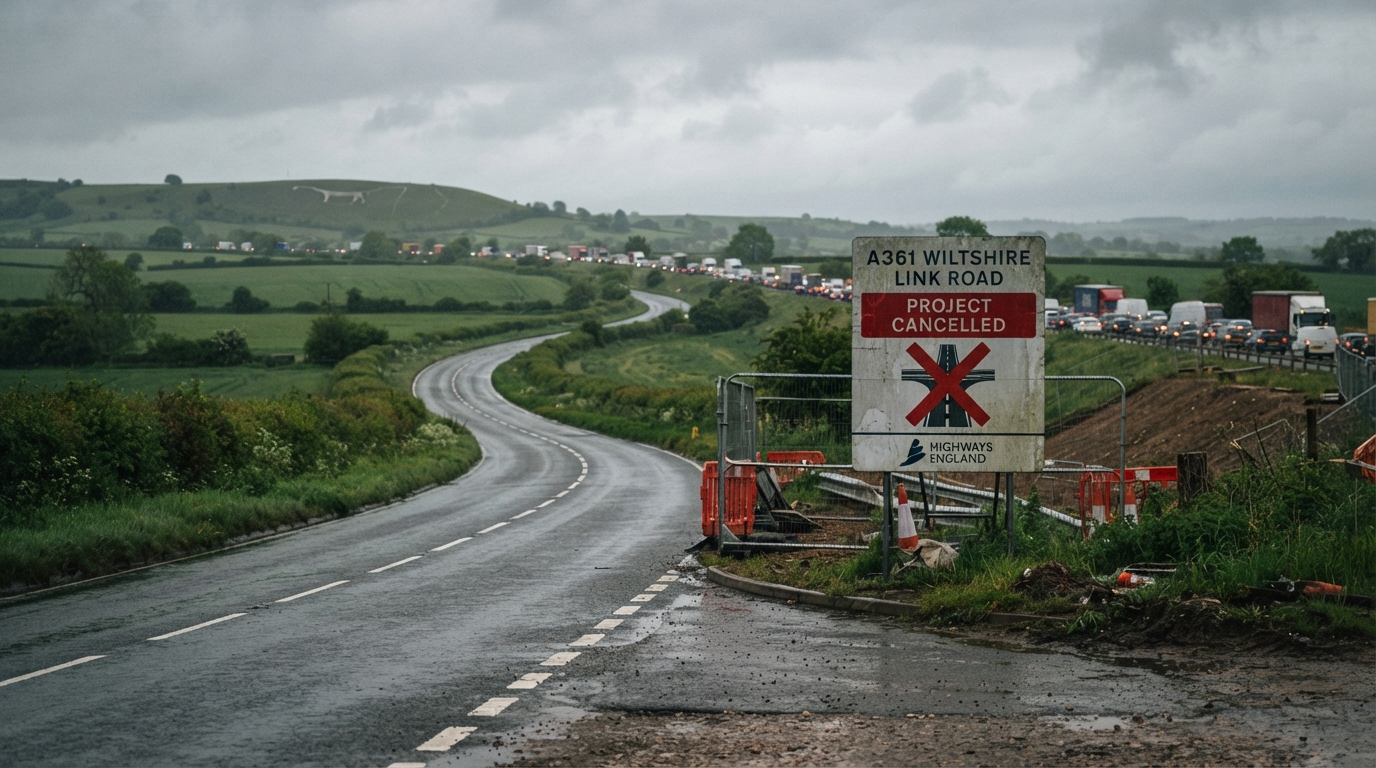
The latest casualty of central government cost-cutting is the £303 million Melksham Bypass scheme, which has now been officially axed. For decades, drivers on the A350 have endured the frustration of the Melksham bottleneck: a vital but heavily congested economic artery carrying more than 35,000 vehicles a day. Rather than addressing this long-standing infrastructure problem, the government has pulled the plug, leaving residents and businesses stuck in gridlock.
Our local representatives at County Hall responded with an emergency debate to express their anger. Yet their immediate focus appears to be securing a refund rather than finding a local solution to the traffic. Wiltshire Council is asking the Department for Transport to return the £500,000 of local taxpayers’ money already spent on developing the scheme’s business case. Half a million pounds has gone into paperwork for a project that will no longer proceed.
The human cost of the A350 bottleneck
Beyond the wasted money and administrative wrangling, the debate at County Hall exposed a harrowing statistic. Councillors revealed that, on that stretch of the A350, someone is killed or seriously injured roughly once every 11 weeks.
Let that sink in. Roughly every 11 weeks, another family faces the consequences of a death or serious injury on a road the government has decided not to upgrade.
Stonehenge: another scheme that never materialised
The abandonment of the Melksham Bypass feels particularly insulting when set against the money spent on other schemes that never materialise. Consider the A303 Stonehenge Tunnel, which swallowed more than £160 million in planning fees, court battles and consultations before being scrapped. Different projects, but the same dispiriting result: vast sums spent without delivering the infrastructure improvements people need.
A wider pattern of misplaced priorities
Leaving a dangerous, congested highway without the promised upgrade fits a familiar pattern of institutional paralysis in Wiltshire. It echoes the culture of avoidance I explored in “The Disastrous Reality of Wiltshire’s Crime Statistics”: glossy public relations material from the leadership while violent crimes against women and girls continue to rise.
The same misplaced priorities were evident when the council poured millions into its arm’s-length housing company, Stone Circle, while allowing its existing council buildings to rot and decay. Whether the issue is housing, policing or major roads, the pattern looks much the same: spend heavily on consultations, watch the problem worsen, kick it into the long grass and then act surprised when the system fails.
Meanwhile, our councillors seem to find time for distractions rather than concentrating on the safety of our road network. There is energy for county-wide crackdowns on temporary cardboard circus posters, debates about the carbon footprint of screenwash and funding for new digital gatekeepers at the local tip. Yet when it comes to upgrading a road where someone is killed or seriously injured roughly every 11 weeks, the cupboard is suddenly bare.
Safer roads, responsible spending and accountability
Scrapping the Melksham Bypass is not just a transport failure; it is a betrayal of North Wiltshire’s drivers and residents. We need more than emergency debates and demands for development-cost refunds. Nor do we need a newly invented “Metro Mayor” producing another glossy Wessex transport brochure. We need the basics: safer roads, responsible spending and accountability for the half a million pounds spent on a scheme that will not go ahead. Until common sense returns to the halls of power, residents are left facing longer queues, deeper potholes and an increasingly treacherous drive home.